
Reviewed · CITY TOURS
Discover Muscat: Group City Tour
Muscat’s appeal comes from its sharp contrasts: sandstone mosques and royal palaces sit beside modern cultural buildings, while the old Muttrah waterfront brings you close to everyday Omani shopping. This four-hour tour links the city’s main sights without asking you to arrange several taxis or work out the distances yourself.
I like the way the route mixes grand architecture with ordinary life at Muttrah Souq. I also like that guides such as Jamal, Abdullah, Mahmoud, Hamood, and Mohammad are singled out for clear explanations, good timing, and even taking photos at useful locations. The main consideration is pace: five stops in four hours means you get a strong introduction, not a slow, detailed visit to every site.
Key points to know before booking
- Five major Muscat stops in about four hours: The route covers the Grand Mosque, Royal Opera House, Muttrah Souq, Al Alam Palace, and Bait Al Zubair.
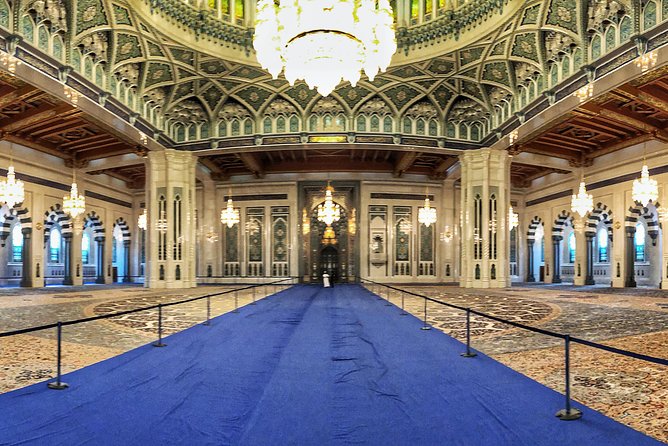
- The Grand Mosque gets a full hour: This is the tour’s most visually impressive stop, with marble, mosaics, Persian carpets, and large chandeliers.
- Two admissions cost extra: Opera House admission is listed at R.O. 3 for adults, and Bait Al Zubair Museum admission is also R.O. 3 for adults.
- A small group keeps the outing manageable: The maximum group size is 20, with an air-conditioned vehicle and licensed guide.
- Guides are a major strength: Jamal is praised for photography and cultural explanations, while Abdullah, Mahmoud, Hamood, and Mohammad receive similar praise for friendliness and local knowledge.
- It works best as a first look at Muscat: You see a lot quickly, but the short schedule leaves limited time for lingering, shopping, or museum study.
Why this four-hour route works in Muscat
Muscat is spread along the coast, with separate areas that do not always feel like one compact city. A guided vehicle makes a real difference here. Instead of piecing together visits to the mosque, opera house, souq, palace, and museum, you move between them with someone explaining what you are seeing.
The tour begins at 9:00 a.m. and lasts about four hours. Pickup is offered, and the package includes bottled water, an air-conditioned vehicle, and a licensed guide. The group can reach 20 people, so this is not a private sightseeing experience, but it is still small enough for a guide to manage questions and keep the group moving.
I would think of this as a Muscat orientation rather than a full cultural study. It gives you the city’s major visual markers and a basic sense of how old and modern Oman fit together. If you have only a short stay, it is an efficient choice. If you have several days, it helps you decide which places deserve a second visit.
More City Tours in Muscat
- Muscat: Budget Friendly City Tour
★ 4.8 · 321 reviews - Half-Day Private Muscat City Tour – Top Landmarks in Just 4 Hours
★ 5.0 · 256 reviews - Oman: Private Muscat City Tour With Pick-up/ Drop-off
★ 4.4 · 234 reviews
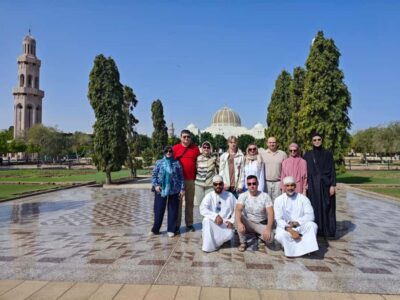
Sultan Qaboos Grand Mosque: the tour’s visual centerpiece
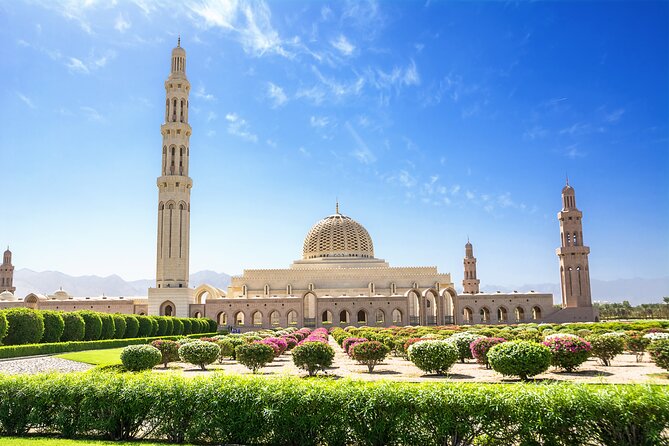
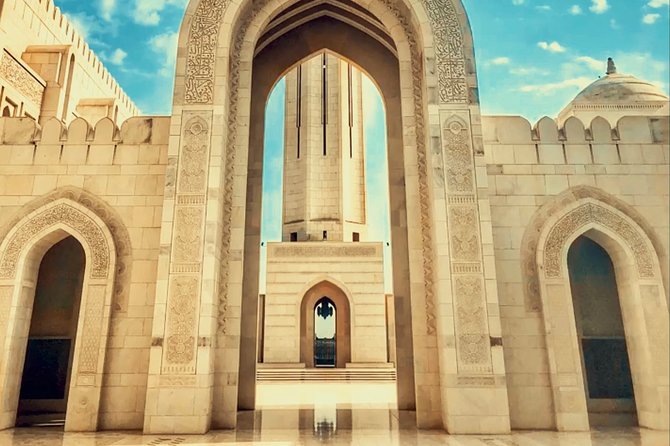
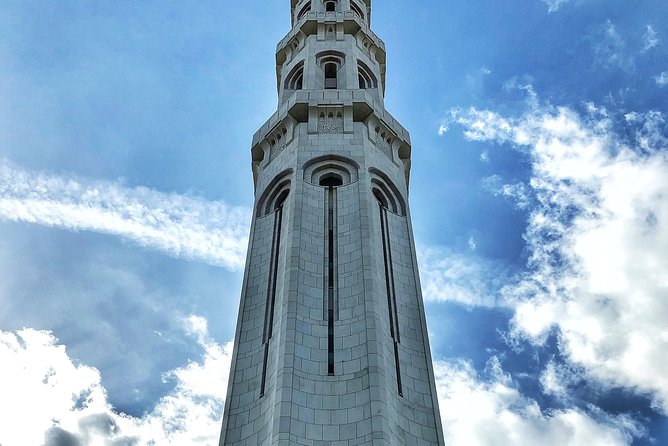
The Sultan Qaboos Grand Mosque receives about an hour, and that is sensible. It is the stop most likely to make you pause before you even enter. The building uses sandstone and marble in a traditional Islamic design, with five minarets: one main minaret and four side minarets.
Inside, the decoration becomes more intricate. You can expect mosaics, large handmade Persian carpets, and chandeliers decorated with crystals. The overall effect is formal and spacious rather than cluttered. This is a place where your guide’s explanation helps, since the building’s scale and design details are easy to admire without understanding their purpose.
The mosque opened in 2001 after six years of construction. That date helps place it in modern Oman. It is not an ancient monument, yet it draws on older Islamic design traditions and remains one of the capital’s defining buildings.
The admission ticket is free, according to the tour details. The practical point is time. One hour gives you room to see the main interior and exterior areas, but not to study every design feature. Plan to pay attention to the guide’s explanation, then use your remaining minutes for photographs and a quiet look around.
Royal Opera House: modern Oman in polished form
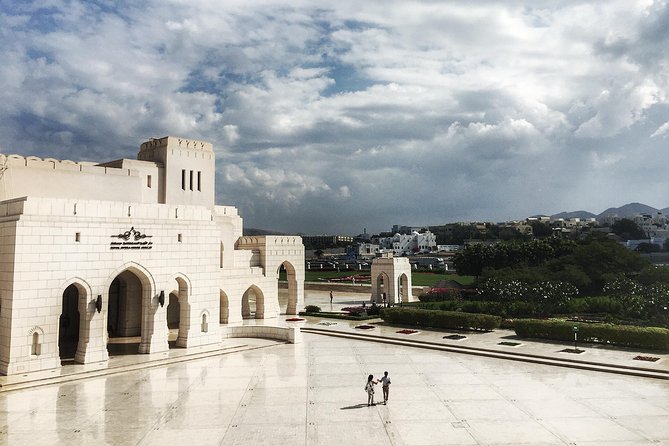
The Royal Opera House provides a clear change of mood. After the mosque’s religious architecture, you move to Oman’s main venue for music and stage performance. The building is described as a pearl of Omani musical and theatrical art, and its inclusion shows that Muscat is not presented only as an old-world capital.
The tour allows about an hour here. Opera House admission is not included, with adult tickets listed at R.O. 3. That extra cost matters when you compare the tour price with the final amount you will spend. At $50 per person, the basic tour is reasonably priced for transport, a licensed guide, water, and five stops, but the two paid attractions add to the total.
You should also confirm how the Opera House visit works on your date, since the supplied information lists admission separately but does not explain whether the full hour is an interior visit or a guided look around the building. That is one of the few points worth clarifying before booking.
Still, the stop adds useful balance. You see a modern cultural institution rather than another palace or historic market. The contrast makes the city easier to understand.
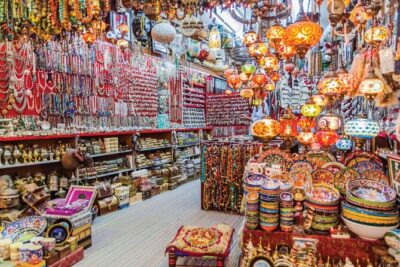
Muttrah Souq: the most hands-on stop
Muttrah Souq is where the outing becomes less about monuments and more about the ordinary business of shopping. The covered rows offer spices, traditional rugs, vases, and souvenirs. You have time to walk, look at goods, bargain, and decide what interests you.
This is probably the stop where you will appreciate having some freedom. The guide can point out the main area, but the pleasure comes from wandering at your own pace. You may find the hour passes quickly if you are comparing souvenirs or stopping to examine traditional items.
The souq is also an important counterpoint to the more formal sights. At the Grand Mosque and Al Alam Palace, you mainly look and listen. At Muttrah, you interact with shopkeepers, examine objects closely, and make your own choices. It is a better place to get a feel for daily commerce in Muscat.
Keep your expectations sensible. One hour is enough for a first walk through the market, but not for an unhurried shopping session. If you want to bargain carefully or buy several items, you may need to return independently. One useful detail from the tour experience is that some people use their free time near Muttrah to walk along the water. That gives you another option if shopping is not your main interest.
A few more Muscat half-days worth weighing up
- Muscat: City Highlights Tour with Optional Transfers
★ 4.8 · 195 reviews - Muscat: Evening Guided City Highlights Tour by Van
★ 4.8 · 175 reviews - Muscat : 4 hours private Tour of Muscat City with Pick-up
★ 4.5 · 163 reviews - Muscat Half Day City Tour with Audio Guiding
★ 4.0 · 155 reviews
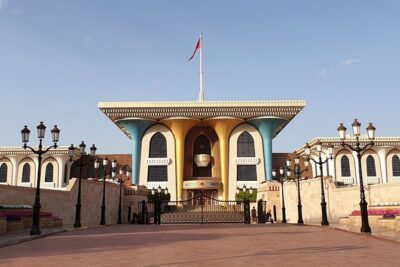
Al Alam Palace: a quick and photogenic pause
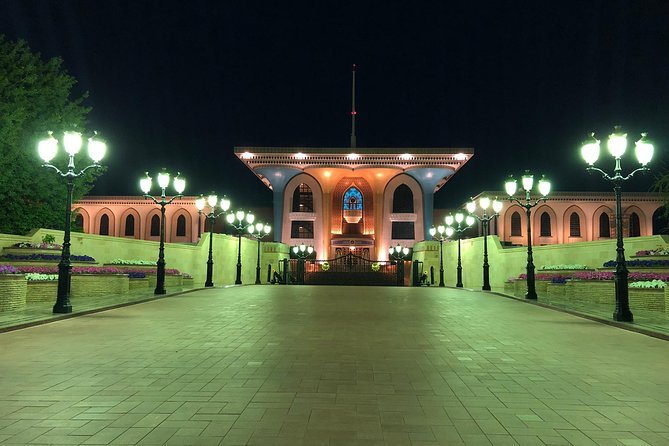
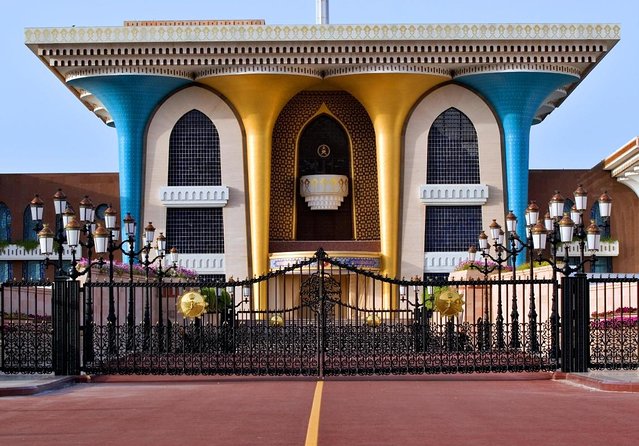
Al Alam Palace is listed as the residence of Sultan Qaboos and receives about 30 minutes. You cannot go inside, so this is an exterior photo stop rather than a palace tour.
The palace sits in the center of Muscat, with forts on both sides. Those surrounding forts give the view more character than the palace facade alone, and the setting makes it a natural place for photographs. A guide who knows the better angles can save you time, which helps on a stop this short.
Do not expect a long visit. Thirty minutes is enough to look around, hear the basic explanation, and take pictures. It is not enough for a detailed discussion of the palace or the forts. That is fine if you treat it as a scenic pause between the souq and museum.
The stop also helps show how Muscat’s main public spaces are arranged. Grand official buildings, defensive forts, and older districts sit close together, which gives the capital a distinct sense of place.
Bait Al Zubair Museum: Omani objects in a private collection
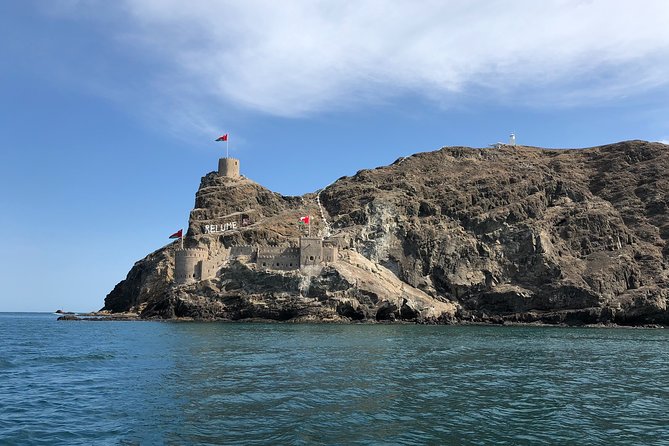
Bait Al Zubair adds a cultural and historical layer to the route. The museum began as a private collection and opened its carved wooden doors to the public in 1998. In 2005, the Zubair family created the Bait Al Zubair Foundation to support work connected with culture, heritage, art, community, history, and publishing.
The collection includes Omani artifacts from several centuries and is described as one of the finest privately owned collections in the country. That makes this stop useful for putting the architecture and shopping into context. Instead of only seeing buildings and market goods, you get a chance to look at objects connected with Omani life and craft.
The tour allows about 30 minutes, and adult admission is listed at R.O. 3, not included in the $50 price. Half an hour is enough for a selected look, but it is short for a museum with several centuries of material. If museums are a priority for you, you may want to return for more time.
For a first visit, the stop works well because it rounds out the day. The mosque shows religious design, the opera house shows modern culture, the souq shows commerce, the palace shows royal Muscat, and Bait Al Zubair gives you objects and traditions to connect those scenes.
How much value do you get for $50?
At $50 per person, this is a solid value if you want transport and a guide for the main city sights. The price covers an air-conditioned vehicle, bottled water, and a licensed guide, while the maximum group size is 20. You are paying for convenience as much as admission.
The extra costs are clear. Opera House admission is R.O. 3 per adult, and Bait Al Zubair Museum admission is also R.O. 3 per adult. Lunch is not included. There is also an additional pickup supplement for certain locations, including Shangri-La, Jumeirah, Al Bustan, Al-Seeb, and Al Mouj.
The value is strongest for first-time visitors, cruise passengers, or anyone with a short stay. You see five key places in one morning and avoid spending time arranging transport between districts. The value is weaker if you already know Muscat well or prefer to spend most of a day in one museum or market.
A private tour would give you more control, but this group format keeps the price lower. With a maximum of 20 people, it offers a practical middle ground between going alone and paying for a fully private vehicle.
The guide can shape the whole experience
The most consistent strength is the guide. Jamal is praised for explaining Omani culture and history, taking photographs, and pointing out useful picture locations. Abdullah is described as friendly and informative, with a clear ability to make the city’s past easier to understand.
Mahmoud is associated with a well-paced route through the Grand Mosque, Opera House, Muttrah, and the older part of Muscat. Hamood is praised for showing good places and explaining Oman. Mohammad receives credit for kindness and punctual timing.
Guide assignments can change, so you should not book expecting one specific person unless the operator confirms it. Still, these names give you a useful sense of the guiding style: local explanation, practical help, photography, and an effort to keep the group on schedule.
That last point matters. With five stops, timing is tight. A guide who communicates clearly can make the morning feel orderly rather than rushed. You will also have someone to ask about what you are seeing instead of trying to identify every building yourself.
What the four-hour pace feels like
The schedule is brisk but logical. The Grand Mosque and Opera House receive an hour each, Muttrah gets an hour, and Al Alam Palace and Bait Al Zubair receive 30 minutes each. The longer stops are the places where you need time to walk and look around, while the shorter stops are mainly for a photo stop or selected museum visit.
You should expect some time in the vehicle between districts. That is not wasted time in Muscat. The drives give you a sense of how the capital’s separate areas connect, and one experience specifically praised the scenery along the route.
The main limitation is depth. You will not have time to linger at every display, bargain for an hour at the souq, or explore the palace area slowly. I would bring a short list of priorities for each stop. At the mosque, focus on the interior design. At the souq, decide whether you want shopping or a waterfront walk. At the museum, choose whether you prefer objects, architecture, or the foundation’s cultural role.
Who should book this Muscat tour?
I would recommend it to first-time visitors who want a clear introduction to Muscat without spending a full day on a single attraction. It also suits people who value a guide’s explanations, need hotel pickup, or prefer a group price to a private vehicle.
It is a good fit for photographers, too. The route has strong visual variety, and guides such as Jamal are noted for helping with photos and choosing useful locations. The air-conditioned vehicle and bottled water also make the morning easier in Oman’s heat, although the supplied details do not specify exact pickup areas or vehicle capacity beyond the group limit.
You may want another plan if your main goal is detailed museum study, long shopping time, or a slow private visit. The tour gives you a taste of each place, not unlimited time at any one of them.
Free cancellation is available if you cancel at least 24 hours before the 9:00 a.m. start. Changes made less than 24 hours in advance are not accepted, and the tour requires a minimum number of participants. If that minimum is not met, you are offered another date or experience, or a full refund.
Should you book Discover Muscat?
Book it if you want to see Muscat’s essential sights in one organized morning and value a guide who can explain the city while handling the driving. The Grand Mosque, Muttrah Souq, and Al Alam Palace give you the strongest sense of place, while the Opera House and Bait Al Zubair add modern culture and Omani objects.
The $50 price is fair for the transport and guide, but budget separately for the two R.O. 3 admissions and lunch. Go in expecting a brisk introduction, not an exhaustive visit. If that matches your schedule, this is a practical way to get your bearings and decide what deserves more of your time.
FAQ
How long is the Discover Muscat group tour?
The tour lasts approximately four hours and starts at 9:00 a.m.
What places are included?
The route includes Sultan Qaboos Grand Mosque, Royal Opera House, Muttrah Souq, Al Alam Palace, and Bait Al Zubair Museum.
Is hotel pickup available?
Pickup is offered. An additional supplement applies for pickup from Shangri-La, Jumeirah, Al Bustan, Al-Seeb, and Al Mouj.
Are admission tickets included?
Admission to the Grand Mosque, Muttrah Souq, and Al Alam Palace is listed as free. Opera House admission and Bait Al Zubair Museum admission are not included.
How much are the extra admission fees?
Adult admission is listed at R.O. 3 for the Royal Opera House and R.O. 3 for Bait Al Zubair Museum.
What is included in the tour price?
The price includes bottled water, an air-conditioned vehicle, and a licensed tour guide. Lunch is not included.
How many people can join the group?
The maximum group size is 20 people.
Just added around Muscat
- Try scuba Diving Tours To Daymaniyat Islands.★ 5.0 · 12 reviews
- Private Muscat City Sightseeing Tour – A Fascinating Capital★ 4.5 · 12 reviews
- Muscat by Night with Local Dinner from Muscat★ 3.5 · 6 reviews
- Muscat Private Departure Airport Transfer★ 5.0 · 4 reviews
- Muscat Private Arrival Airport Transfer★ 4.0 · 7 reviews
- Muscat Shore Excursion: Private City Highlights Tour★ 4.5 · 15 reviews
- Muscat : Luxury car with private driver★ 5.0 · 18 reviews
- 5 Hours Private Tour in Muscat City★ 5.0 · 3 reviews
City Tours, compared.


Half-Day Private Muscat City Tour – Top Landmarks in Just 4 Hours
Read our review →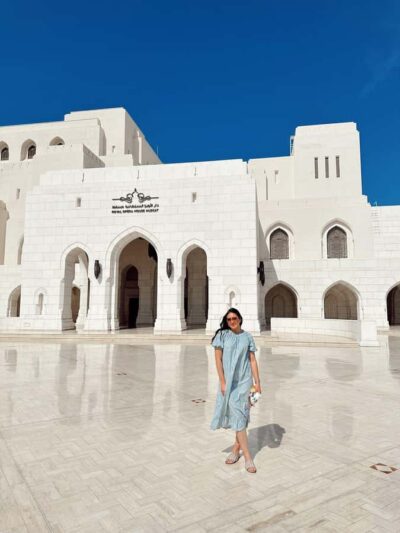

Half-Day Private Muscat City Tour- with a local guide
Read our review →
Browse the lists this tour appears in