
Reviewed · SALALAH TOURS
Salalah: Wadi Darbat, Jabal Samhan, Baobab, Mirbat Sand Dune
Jabal Samhan is the headline here: from roughly 4,000 feet, you look across sheer mountain edges where mist can gather below. But the real strength of this outing is its variety. In one day, you can see old Dhofari houses and castles, camels at Wadi Darbat, a huge sinkhole, rare baobab trees, sand dunes, and the coast.
I like the way the guides, including Adel, Mohammed Ali, Salim, and Tariq, add local stories rather than simply pointing out photo stops. I also like the flexible pace, with photo breaks and occasional extra stops often added when time allows. The catch is seasonal: outside the khareef months, Wadi Darbat’s waterfall may be little more than a dry riverbed, and mist can hide Jabal Samhan.
Key points at a glance
- Wadi Darbat brings the animal encounters: Camels, horses, and cattle may gather around the water, with optional boat or kayak rides.
- Jabal Samhan is the big view: The high lookout gives you a dramatic sense of Dhofar’s mountain edge, though cloud can block it.
- The route mixes nature and culture: Taqa Castle, Burj Al Askar, and the Koofan Heritage House add real context to the scenery.
- The full-day route earns its price: At $76, the tour covers many distant sights that would be awkward to connect without a 4WD-style vehicle.
- Season matters: Khareef usually gives Wadi Darbat its greenest appearance and strongest waterfalls.
- Pack lunch and modest clothing: Food is not included, and shoulders and knees should be covered.
A full day across East Salalah
This is one of the better ways to understand Dhofar’s geography quickly. You begin near the coast, climb into the mountains, pass through wadis and sinkholes, then finish among baobab trees and the dunes near Mirbat.
The vehicle is a Jeep or SUV, with pickup from hotels, apartments, the port, and the airport in Salalah or Hawana Salalah. Pickup from Mirbat and Hinu Bay costs an extra OMR 10 per group. The route takes about four to eight hours, depending on whether you book the half-day or full-day version and how long you spend at optional stops.
I would choose the full day if this is your first visit to Salalah. The half-day option is useful when you have limited time, but it leaves out the most dramatic mountain and desert sections.
More Mountain Tours in Salalah
- East Salalah Mountain Safari, Wadi Darbat, Beach, Camels, Dunes
★ 5.0 · 206 reviews - Mountain Safari Private Tour
★ 5.0 · 105 reviews - East Salalah Mountain Safari
★ 5.0 · 43 reviews
Taqa begins with cliffs, castles, and coastal life
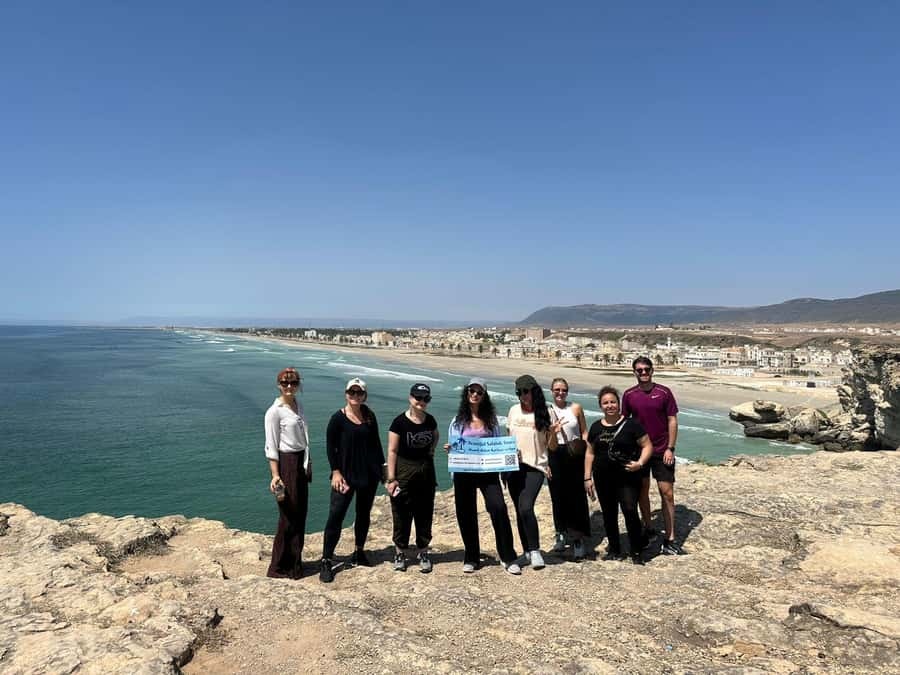
The first major stop is Taqa, a traditional coastal town east of Salalah. The tour may begin with views from the Taqa cliff, where you can look down toward the town and sea. This is an easy place to get your bearings: Dhofar is not just palms and beaches, but a meeting point of steep mountains, open sea, and old settlements.
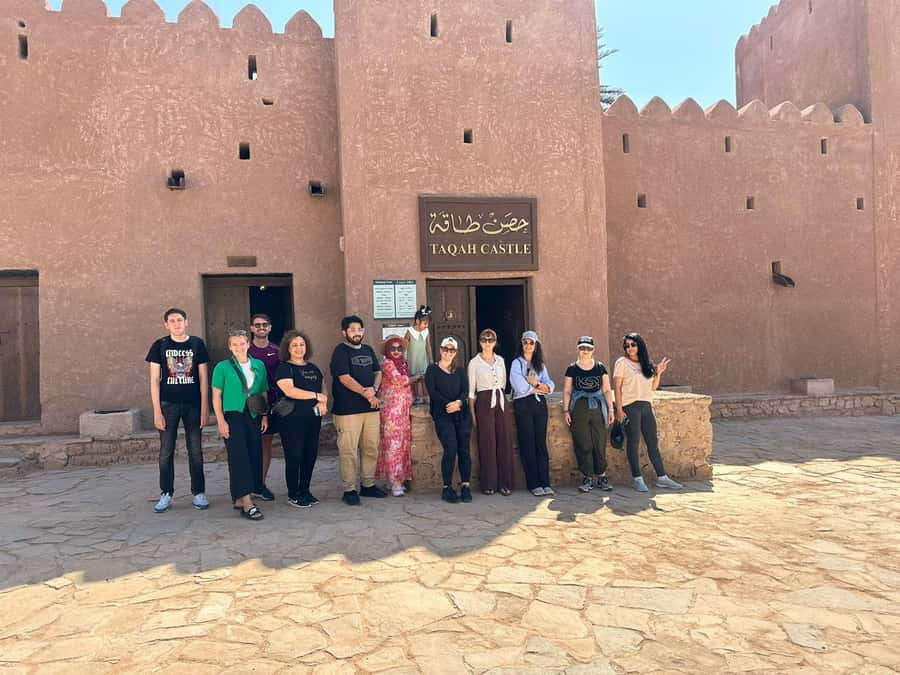
Taqa Castle gives the morning a historical anchor. The 19th-century building helps explain how local rulers lived and governed before modern roads and hotels changed the coast. You can visit inside if you pay the separate entry fee, or simply view the exterior and continue.
Burj Al Askar, also called Taqa Fort, is another optional stop. Its cliff-top position makes it especially useful for photographs, with views toward the castle and coast. The Koofan Heritage House offers a different kind of history. Rather than a defensive building, it shows the form of a 150-year-old Dhofari home.
Entry to these sites is not included, so bring cash or a card if you want to go inside. If you prefer scenery to interiors, you can still enjoy the town and viewpoints without paying for every attraction.
Wadi Darbat is the tour’s natural center
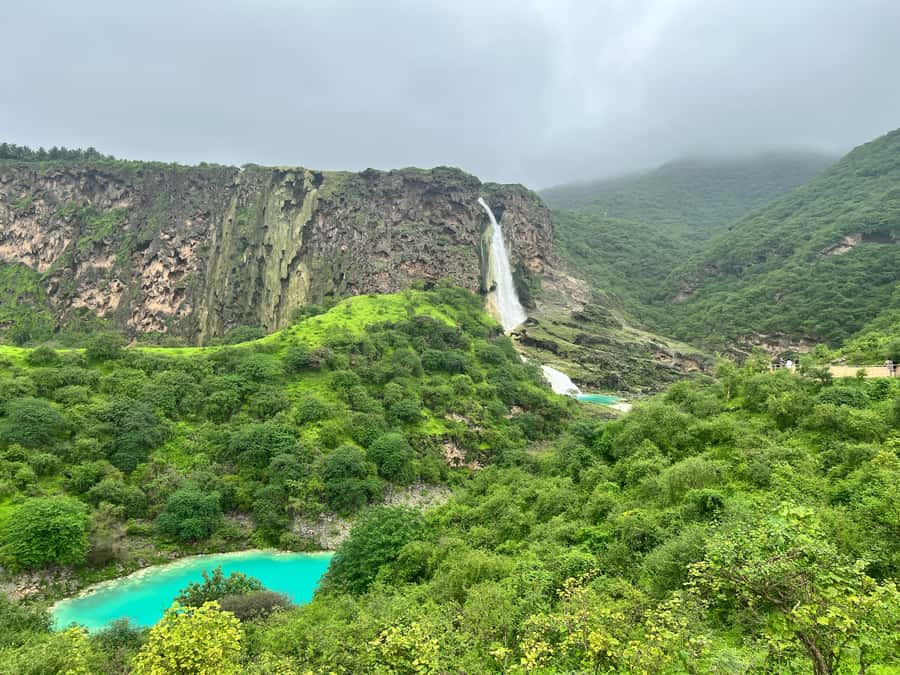
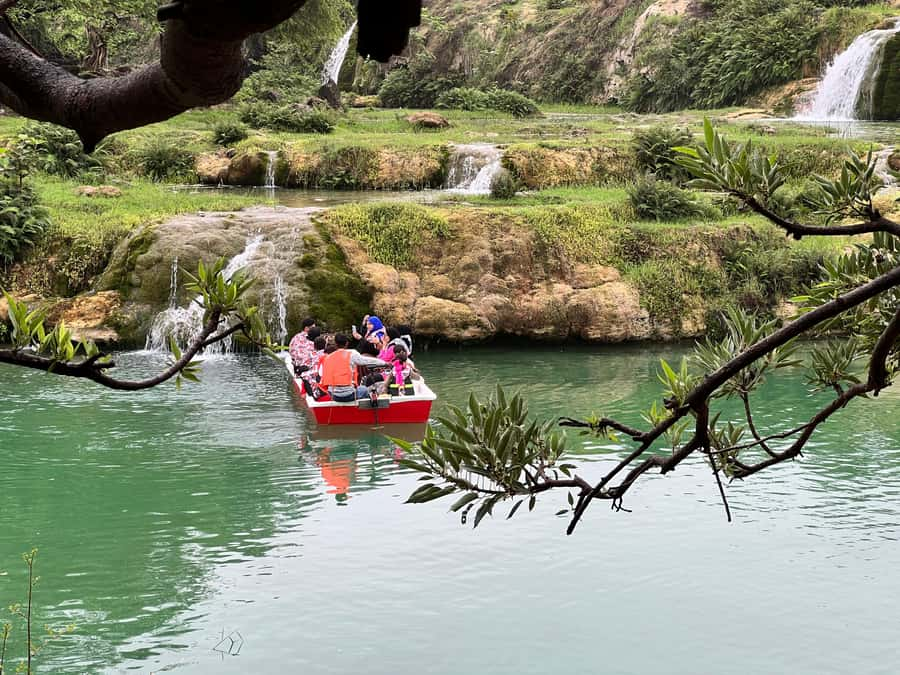
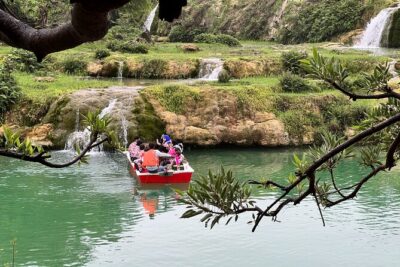
Wadi Darbat is the most visited natural site in Dhofar, and it is easy to see why. The valley has open water, green growth during the wet season, mountain scenery, and a relaxed rural feel that contrasts with Salalah’s built-up areas.
The wadi is also a good place for animal watching. Camels may wander close to the water, while horses and cattle can sometimes be seen nearby. That mix gives the stop more character than a simple viewpoint. Keep a respectful distance from the animals, and let your guide advise you about safe places to walk.
A boat cruise or kayak ride is optional and costs extra. The water route is calm and short, lasting about 30 minutes, and can be a pleasant break after the drive. Horse riding may also be available at the site, but it is not part of the included tour price.
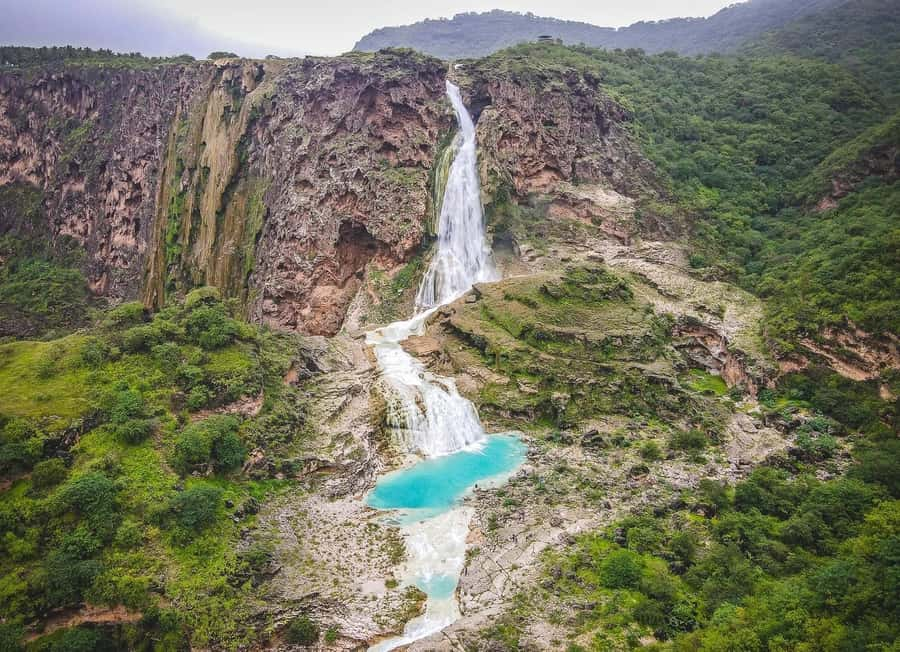
Here is the important seasonal warning: do not book this tour expecting guaranteed waterfalls. During khareef, generally the best period for mist, rain, and green scenery, Wadi Darbat can look lush and its falls may be flowing. In the dry season, the valley can still be attractive, but the river and falls may be weak or dry.
You should also know that the group may have more than one guide or language group in the same vehicle. Most of the time this works well, but it can create confusion if one group finishes an activity sooner than another. Confirm with your guide how much free time you have before taking a boat ride or stopping for food.
The Tawi Attair Sinkhole adds a sense of scale

On the full-day route, the next stop is the Tawi Attair Sinkhole, often called the Birds Well. It is a large natural opening in the mountain, and the viewpoint gives you a strong impression of Dhofar’s limestone terrain.
This is not a polished amusement attraction. The appeal comes from size, depth, and the thought of water and erosion shaping the rock over time. Wear sturdy shoes if you plan to walk around the viewing area, and follow your guide’s advice near edges.
One useful point from the schedule is that the stop lasts around 30 minutes. You have enough time for photographs and a look around, but this is not a long hike. If you want to spend more time exploring, ask the guide early in the day how much flexibility the group has.
More wadi tours in Salalah:
- Salalah: Half-Day Guided Tour to Wadi Darbat & Mount Samhan
★ 4.9 · 46 reviews - Salalah: Wadi Derbat, Jabal Samhan, & Sinkhole Private Tour
★ 4.9 · 42 reviews - Private tour – Empty Quarter desert adventure – Wadi Dawka + Ubar
★ 5.0 · 5 reviews - Salalah: Wadi Darbat, ,Teeq Cave – Baobou Trees Tour
★ 4.3 · 3 reviews
Jabal Samhan is the high point, literally
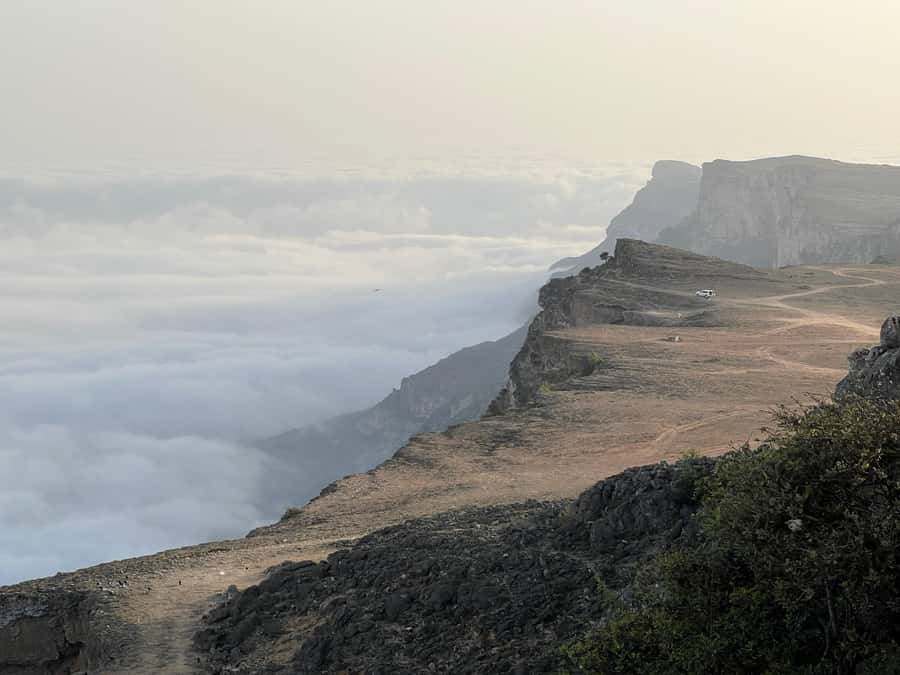
Jabal Samhan is the tour’s most powerful viewpoint. At about 4,000 feet, the mountain edge gives you a wide view over southern Oman, with clouds sometimes rolling across the cliffs below.
The phrase above the clouds is not just marketing here. In misty conditions, you may see white cloud cover pressed against the mountain slopes. In clear weather, the cliffs and distant plains become the main attraction.
The drawback is obvious: weather controls the experience. One July visit had to skip the summit because heavy mist made the mountain unsafe and the view impossible. A good guide will adjust the route rather than force a stop in poor visibility. That flexibility matters more than ticking every box on a schedule.
The stop is listed at about 30 minutes, so this is a viewpoint visit, not a long mountain walk. You should bring a light layer if you are sensitive to cooler mountain air, though the supplied information does not promise a particular temperature.
Baobabs and Gravity Hill keep the afternoon playful
Wadi Hinna is home to ancient baobab trees, unusual giants in this part of Oman. Their thick trunks and broad shapes make them one of the most memorable stops, especially for photographers. You only have around 15 minutes listed here, so use the time well and ask your guide for the best angle.
The trees also show why the route is more than a standard coast-and-waterfall trip. Dhofar has plant life that feels different from the rest of Oman, and the baobabs give you a clear visual reminder of that.
Later, the vehicle passes Gravity Hill near Salalah. Here, you put the vehicle in neutral and watch it appear to roll uphill. The effect is a roadside curiosity rather than a major attraction, but it breaks up the longer drive and gives the group something lighthearted to test together.
Do not expect a long walk at either stop. These are short, unusual pauses that work best as part of a larger day.
Mirbat’s dunes finish the route with sand and sea
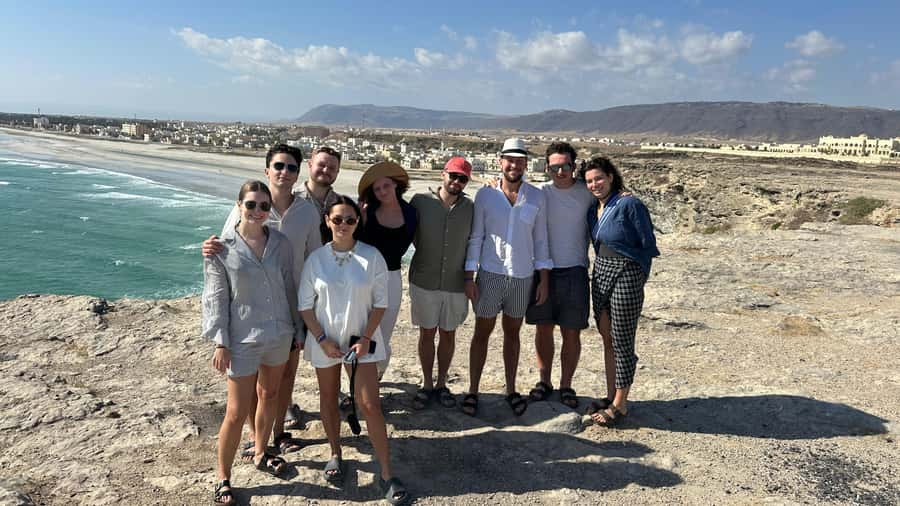
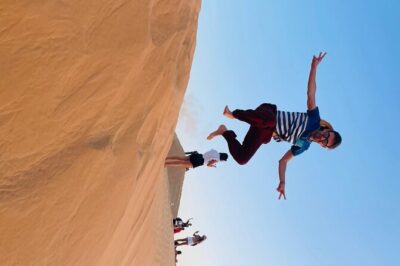
The final major stop is the Ad Damar sand dunes near Mirbat. Golden sand meets mountain and coastal scenery, giving the day a different ending from the green valley and high cliffs earlier on.
The visit lasts about 20 minutes, enough for photographs and a short walk. Wear shoes that you do not mind getting sandy. The dunes are not presented as a long sandboarding session, so you should think of this stop as a scenic finish rather than an organized desert activity.
I like the order of the full-day route. You see heritage in the morning, spend the middle of the day around the wadi and mountains, then reach the baobabs and dunes later. It feels varied, though the final drive can be tiring if you are not used to a long day in a vehicle.
What the $76 price really buys you
At $76 per person, the value rests mainly in transport, route planning, and access to distant places rather than included activities. You receive hotel pickup and drop-off, a guide, bottled water, and transport by Jeep or SUV.
You do not receive lunch, castle or heritage-house entry, boating, kayaking, or other paid activities. That means the final bill can rise if you add several extras. Still, hiring a vehicle and trying to connect Taqa, Wadi Darbat, Jabal Samhan, the sinkhole, Wadi Hinna, and Mirbat independently would take more planning and local driving confidence.
The guides are a major part of the value. Adel has been especially good at taking photographs for solo visitors and explaining the stops in clear English. Mohammed Ali is known for local stories, humor, and thoughtful touches, including helping with a birthday celebration. Salim has handled difficult mountain weather carefully, while Tariq has been praised for explaining Dhofar’s culture and religion.
The tour suits solo visitors unusually well because shared departures are available. Groups may be small, with one outing having six people, but group size can vary. If you need a quiet private trip, ask before booking.
Food, clothes, and the small practical details
Eat breakfast before pickup. There is no dependable restaurant stop built into the route, although you may be able to stop for lunch or eat at Wadi Darbat or Samhan. Bring your own lunch, snacks, and enough water beyond the complimentary bottles.
Dress for Oman’s modest clothing expectations. Cover your shoulders and knees, and skip mini-skirts, shorts, sleeveless shirts, and deep necklines. Comfortable clothes and hiking shoes are sensible because the day includes uneven ground, viewpoints, and short walks.
Bring cash and a credit card for optional entries and activities. Comfortable shoes are more useful than fashionable ones, especially at the sinkhole and baobab stop.
The tour is not suitable for people with mobility impairments, pregnant women, or anyone over 95. It is also not designed as a demanding trek, but you should still be able to get in and out of an SUV and walk short distances over natural ground.
Free cancellation is available up to 24 hours before departure, and you can reserve without paying immediately. Starting times vary, so check the date carefully before committing.
Half day or full day?
Choose the half-day route if you want Taqa, Wadi Darbat, and a taste of East Salalah without giving up most of the day. It is the better fit for a short stopover, a relaxed schedule, or anyone who prefers fewer hours in a vehicle.
Choose the full-day route if Jabal Samhan, the sinkhole, baobabs, Gravity Hill, and Mirbat dunes are the reason you are interested. The long version is busy, but it gives you the broadest picture of Dhofar’s coast, mountains, wadis, and desert.
I would avoid judging the tour only by the waterfall. The route has enough variety to remain worthwhile when the wadi is dry, but expectations should match the season. Khareef offers the strongest chance of green scenery and flowing water. Outside that period, you are booking the cliffs, animals, geology, baobabs, and dunes.
Should you book this Salalah tour?
Book it if you want to see many sides of Dhofar in one organized day, especially if you are traveling alone, do not want to rent a car, or have limited time. The strongest reasons are the broad route and the guides’ personal attention, particularly when weather forces a change.
Skip it if you want a slow day at one site, guaranteed waterfalls, or a tour with lunch and activities included. For most first visits, though, the $76 full-day option is a sensible way to reach East Salalah’s far-flung sights. Pack food, dress properly, ask about the day’s timing, and treat the route as a weather-dependent exploration rather than a fixed checklist.
FAQ
How much does the tour cost?
The listed price is $76 per person. Optional entrance fees, food, boating, and kayaking are not included.
How long does the tour take?
The activity lasts about four to eight hours. The exact duration depends on whether you choose the half-day or full-day option and on the schedule for the day.
What does the full-day tour include?
The full-day route can include Taqa Castle, Burj Al Askar, Wadi Darbat, the Tawi Attair Sinkhole, Jabal Samhan, baobab trees at Wadi Hinna, Gravity Hill, and the Mirbat sand dunes.
What does the half-day tour cover?
The half-day option covers the Taqa area and Wadi Darbat. The sinkhole, Jabal Samhan, baobab trees, Gravity Hill, and Mirbat dunes are listed for the full-day route only.
Are boat rides and kayaking included?
No. Boat rides and kayaking at Wadi Darbat are optional and cost extra.
Is lunch included?
No. You should eat breakfast and bring lunch or snacks. A lunch stop may be possible, but there is no good restaurant scheduled during the natural-site route.
Where is hotel pickup available?
Pickup and drop-off are included from hotels and apartments in Salalah and Hawana Salalah, as well as the Salalah port and airport. Pickup from Mirbat and Hinu Bay costs an additional OMR 10 per group.
Can I cancel the booking?
You can cancel up to 24 hours in advance for a full refund. The reserve-now, pay-later option allows you to hold a place without paying immediately.
Just added around Salalah
- West Salalah Beaches and Blowholes★ 5.0 · 7 reviews
- West of Salalah private tour – fascinating mountains and beaches★ 5.0 · 9 reviews
- Sunset desert safari Salalah with Dinner in a Bedouins camp★ 5.0 · 18 reviews
- Explore Samhan Mountain – Half-Day Getaway with Lunch Included.★ 5.0 · 10 reviews
- Private tour – Empty Quarter desert adventure – Wadi Dawka + Ubar★ 5.0 · 5 reviews
- West Salalah Tour by VisitSalalah★ 5.0 · 6 reviews
- Where Sea Meets Rock: A Scenic Journey to West Salalah’s Shores★ 5.0 · 5 reviews
- Full-Day Private Salalah West Tour with Lunch★ 5.0 · 12 reviews
Salalah Tours, compared.
East Salalah Mountain Safari, Wadi Darbat, Beach, Camels, Dunes
Read our review →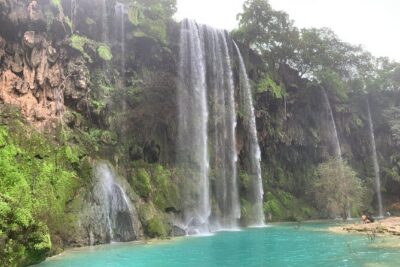
Sunset Desert Safari Salalah Tour in Rub Al Khali – Empty Quarter
Read our review →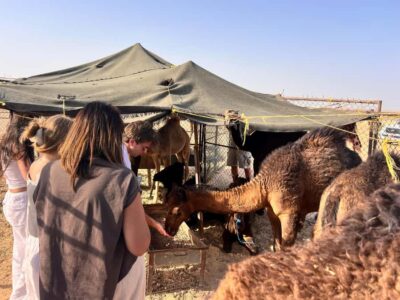
Sunset Desert Safari – Rub Al Khali – Empty Quarter
Read our review →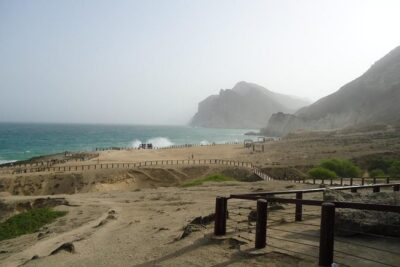
West Salalah Tour – Caribbean of Orient – Fazayah Beach with City
Read our review →
West Salalah: Caribbean of the Orient Fazayah Beaches & City
Read our review →
Salalah City Tour: Discover the Best of Oman’s Coastal Gem
Read our review →
Sunset desert safari tour in Salalah(private tour)
Read our review →Browse the lists this tour appears in