
Reviewed · SALALAH TOURS
Jebel Safari – Tour della montagna
Salalah’s eastern mountains pack a surprising amount into one day: an old governor’s house, a ruined Indian Ocean port, enormous sinkholes, desert roses, dragon blood trees, baobabs, and a fishing town known for dhows. The route gives you Oman’s history and high country in one long sweep, rather than keeping you in the city or on a single viewpoint.
I like the private format, since your group of up to four can set the pace with the guide. I also like the mix of stops: Sumhurram and Khor Rori provide genuine historical interest, while Tawi Attir, Jebel Samhan, and Wadi Hinna bring the striking mountain scenery. The main consideration is the eight-hour length. This is a full day with plenty of driving, and the route will suit you best if you want variety more than a slow visit to one place.
Key points to know before booking
- Taqa begins the day with local history: Enter the former governor’s house and see how a traditional Omani home was arranged.
- Sumhurram connects Salalah to sea trade: The ancient port once helped control the spice trade across the Indian Ocean.
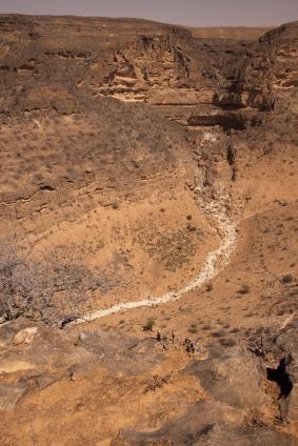
- Tawi Attir is a major natural stop: The bird’s well sinkhole is paired with Jebel Samhan’s larger chasm and its unusual trees.
- Lunch comes at a high panoramic point: You eat near the beginning of the Arabian leopard reserve.
- Wadi Hinna changes the scenery again: The baobab forest gives the return journey a distinctly African-looking touch.
- Mirbat finishes with seafaring culture: Traditional dhows still leave this coastal town with local fishermen.
Why this Salalah mountain tour works so well
Many day trips from Salalah focus on one idea, such as beaches, waterfalls, or mountain views. This outing is broader. You move from a coastal village to an ancient trading port, then climb into the high country before dropping through a wadi to a baobab forest and a fishing town.
That variety is the strongest reason to book it. You get a useful sense of Dhofar as a region, not just a collection of scenic stops. The day also has a clear geographical rhythm. The coast and archaeology come first, the mountains take up the middle, and the sea returns at Mirbat.
The tour is private for your group, with space for up to four people. The listed price is $502.57 per group, not per person. With four people sharing the vehicle, that works out to about $125.64 each. For two people, the per-person cost is much higher, but the private arrangement still gives you more control than a large shared excursion.
Pickup is offered, and the booking uses a mobile ticket. The tour lasts about eight hours, so I would treat it as a full day rather than a casual half-day outing. Bring patience for the road, especially if you prefer long stops and a relaxed pace.
More Mountain Tours in Salalah
- East Salalah Mountain Safari, Wadi Darbat, Beach, Camels, Dunes
★ 5.0 · 206 reviews - Salalah: Wadi Darbat, Jabal Samhan, Baobab, Mirbat Sand Dune
★ 4.6 · 178 reviews - Mountain Safari Private Tour
★ 5.0 · 105 reviews
Taqa and the former governor’s house
The first cultural stop is Taqa, a village east of Salalah. Here you enter the old house of the city’s governor and see the interior of a traditional Omani home.
This is a useful start because it puts local life before the big scenery. Instead of seeing Oman only through forts, ruins, and mountain roads, you get a look at domestic architecture and the way an important local residence was arranged. The house gives the tour a human scale.
Do not expect a long museum visit with a large collection of labeled objects. The appeal is the building itself and the chance to see traditional Omani interiors. Your guide can add context, and the private format should make it easier to ask questions or spend a little more time where something catches your interest.
Taqa also helps set up the rest of the day. Dhofar’s history is not separate from its geography. Homes, ports, wadis, and mountain routes all connect to the region’s position beside the Indian Ocean.
Khor Rori and the ruins of Sumhurram
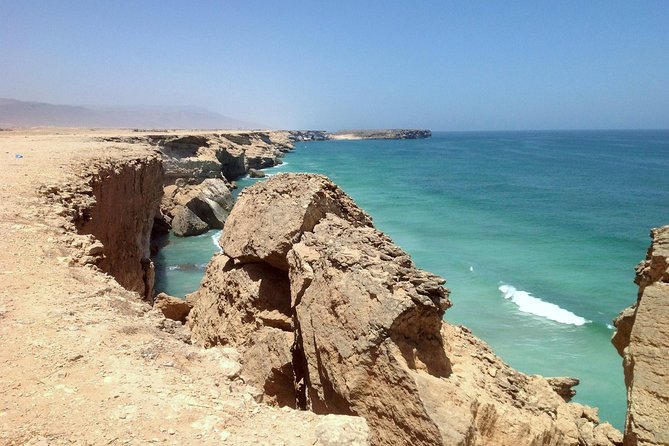
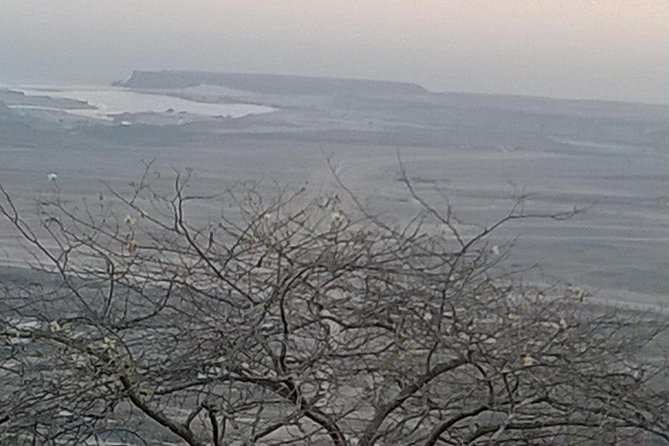
The route then reaches Khor Rori, a striking lagoon beside the archaeological site of Sumhurram. The lagoon gives the ruins a strong setting, and the site explains why this part of the coast mattered long before modern tourism.
Sumhurram was a port built by the kingdom of Hadramout to control the spice trade on the Indian Ocean. That detail makes the ruins more than a pile of old stones. This was a working place tied to ships, cargo, and long-distance commerce.
I especially like this stop for readers who want history without giving up scenery. You can connect the remains to the lagoon and to the coast beyond it. The port’s location helps you picture how goods moved through the region and why a settlement was built here.
The archaeological visit also adds balance to the day. Later, the mountains provide the visual drama, but Sumhurram supplies the historical backbone. Give yourself time to look beyond the most obvious walls and consider the site as a port system, not simply an isolated ruin.
The wording supplied for the experience identifies Sumhurram as a UNESCO site. That gives this stop particular weight, though the tour does not provide a detailed list of the site’s official designation or any formal guided interpretation. Your guide remains important here, especially if you want more context than the ruins alone provide.
Tawi Attir, the bird’s well
After the coastal history, the road turns upward into the region’s highest mountains. One key stop is Tawi Attir, known as the bird’s well.
A sinkhole is a natural opening or collapse in the ground, and Tawi Attir gives the mountain route a dramatic change of scale. Rather than simply stopping for a wide view, you are looking down into a deep geological feature. The name adds a local touch, but the physical setting is the main event.
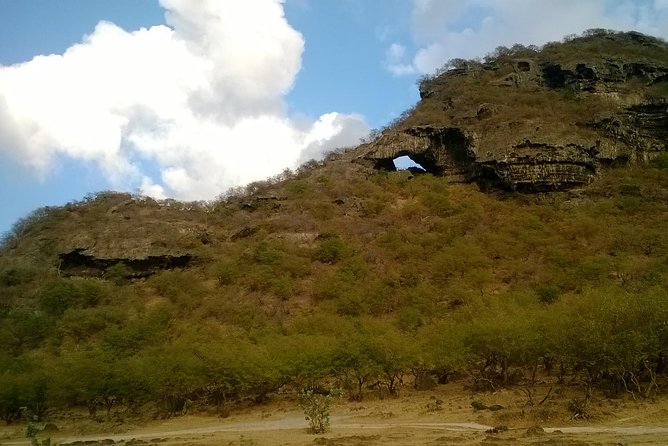
The tour description also notes Teeq Cave alongside Tawi Ateer Sinkhole. The available information does not spell out how much time you spend inside the cave or whether the visit involves a walk, so you should ask the operator if that detail matters to you. The route is described as suitable for most people, and one account describes an easy trek, but the exact walking conditions can vary by stop.
This is one place where practical footwear makes sense. The tour is not presented as a technical hike, yet mountain viewpoints and sinkholes are better enjoyed with steady shoes than with smooth-soled sandals. You should also expect the guide to shape the timing around road conditions and the day’s available daylight.
Same corner of Oman, a completely different kind of day:
- Sunset Desert Safari Salalah Tour in Rub Al Khali – Empty Quarter
★ 5.0 · 91 reviews - Salalah: Sunset Desert Safari – Rub Al Khali – Empty Quarter
★ 4.6 · 79 reviews - West Salalah Tour – Caribbean of Orient – Fazayah Beach with City
★ 5.0 · 74 reviews - West Salalah: Caribbean of the Orient Fazayah Beaches & City
★ 4.5 · 60 reviews
Jebel Samhan and the desert rose trees
The high-country portion continues toward the second largest sinkhole on earth, according to the tour description. Here you can see desert rose trees and dragon blood trees, plants that give the dry mountain country a character unlike the coastal lagoon and ruins.
The trees are a major reason to pay attention between viewpoints. A mountain day in Oman can become a string of photo stops if you only look at the horizon. The desert roses and dragon blood trees make the place specific. They show how plant life survives in this severe setting.
Jebel Samhan also changes your sense of Dhofar’s size. From Salalah, the mountains may appear like a distant wall. Up high, you see how much the terrain rises and how the roads connect the coast with remote country.
The tour reaches a panoramic point near the start of the national reserve of the Arabian leopard. The information provided does not promise a leopard sighting, and you should not book this day expecting wildlife encounters. The value is the protected mountain setting and the chance to look across the high country.
A picnic at the high viewpoint
Lunch is served as a picnic at the highest panoramic spot. This is a simple but well-placed part of the day. After the morning’s archaeology and mountain stops, you have time to pause rather than eat in the middle of another transfer.
The supplied details do not specify the full menu, so do not assume a particular dish or dietary arrangement. One account describes an Arabic-style lunch, which suggests a local meal may be part of the experience, but you should confirm food needs when booking.
The viewpoint also gives lunch a sense of place. You are near the beginning of the Arabian leopard reserve, high above the lower country. That setting matters more than a formal dining room would on this particular tour.
The private setup is useful here. With only your group involved, you can ask the guide about the reserve, the plants, or the mountains without worrying about a large coach schedule. If you want a long picnic, tell the guide early. The day includes many stops, and time spent at one point may shorten another.
Wadi Hinna and the baobab forest
The return route goes down through Wadi Hinna. A wadi is a valley or channel that can carry water at certain times, and this section gives the day another change in scenery.
The highlight is the baobab forest. Baobabs are instantly recognizable for their thick trunks and unusual shape, and finding them in southern Oman makes this stop feel very different from the mountain sinkholes. The trees are not just a quick natural footnote. They give you a reason to slow down and look closely at the plant life of Dhofar.
I like the way Wadi Hinna prevents the second half of the tour from becoming a simple drive back to Salalah. You continue seeing things that do not repeat the morning. The route moves from high mountain rock to a more open valley setting, then back toward the coast.
An account of a similar mountain day describes extra stops chosen by the guide when time allows. That is worth keeping in mind. The guide may adjust the route or add a short point of interest, but you should not treat unlisted additions as guaranteed. The day’s main attractions are the published stops.
Mirbat and the last look at the Indian Ocean
Before returning to Salalah, the tour reaches Mirbat. This coastal town is tied to fishing, and traditional Indian Ocean boats called dhows still sail from here with local fishermen.
Mirbat gives the day a fitting final chapter. In the morning, Sumhurram showed an ancient port connected to the spice trade. At the end, you see a living seafaring tradition. The boats link the old commercial coast with the present day.
The tour does not promise a boat ride or a scheduled fishing activity. You are visiting the town and seeing the setting where fishermen still use dhows. That distinction matters if you are hoping to get on the water.
Mirbat also gives you one final contrast with the mountains. After sinkholes, desert roses, dragon blood trees, and a baobab forest, the sea returns to the route. You finish with a better understanding of how closely Dhofar’s coast and highlands fit together.
The guide and the private format
The operator is DhoIT, Dhofar International Tourism. The supplied information connects Geraldina with organizing the day and names Salim as a guide on a mountain excursion. It also identifies Alice and Mahmoud in connection with a Nizwa and Saiq Plateau day, so those names should not be treated as a guarantee for this exact route.
The useful point is the personal organization. Geraldina can be contacted in Italian, and Salim is described as a guide who can add stops when time permits. If language matters to you, ask for confirmation before booking rather than assuming the same guide will be assigned.
A private tour can be a good value for a family or small group. Four people sharing $502.57 receive transport, a full day of guiding, and a route with many separate sites. For solo visitors, the price is much harder to justify. Two people may still prefer the privacy and flexibility, but a shared group trip could cost less if one is available.
The day also suits people who want direct access to questions. You can ask about the old house, the spice port, the sinkholes, the trees, or the reserve as you go. That is harder to do on a large bus with fixed commentary.
Who should book this day?
I would choose this tour if you want a broad introduction to eastern Dhofar and do not mind a busy schedule. It suits couples, families, and small groups that value a private vehicle and want both culture and scenery.
It is also a good choice if your Salalah visit is short. In eight hours, you cover Taqa, Khor Rori, Sumhurram, the Jebel Samhan high country, Wadi Hinna, and Mirbat. You will not study every place in depth, but you will see a wide range of the region.
You may want another option if your priority is a slow archaeological visit, a serious hike, or a guaranteed wildlife sighting. The description supports an easy trek and broad sightseeing, not a demanding expedition. The Arabian leopard reserve is part of the setting, but an animal encounter is not promised.
Most people can participate, and service animals are allowed. The booking includes free cancellation if you cancel at least 24 hours before the local start time. Cancellations or changes made inside that window are not accepted for a refund.
Should you book the Jebel Safari?
Book it if you want one well-packed day that links Omani homes, an ancient port, high mountain views, unusual trees, a baobab forest, and living dhow culture. The private format makes the $502.57 group price reasonable when shared by four people, and the route offers more variety than a single scenic drive.
Skip it if you dislike long days on the road or want a relaxed visit with only one or two main stops. For the right group, this is a strong Salalah day trip because its best feature is not one viewpoint. It is the changing story of Dhofar from coastal trade to mountain country and back to the sea.
FAQ
How long does the Jebel Safari tour last?
The experience lasts approximately eight hours.
How much does the private tour cost?
The listed price is $502.57 per group, with up to four people included.
Does the tour include pickup?
Yes. Pickup is offered.
Is lunch included?
The itinerary includes a picnic lunch at the highest panoramic viewpoint near the start of the Arabian leopard reserve. The exact menu is not specified.
Which main places does the tour visit?
The route includes Taqa, the former governor’s house, Khor Rori, Sumhurram, Teeq Cave, Tawi Attir sinkhole, Jebel Samhan, Wadi Hinna, the baobab forest, and Mirbat.
Can I cancel for a full refund?
Yes, if you cancel at least 24 hours before the experience begins. Cancellations or changes made less than 24 hours before the local start time are not accepted for a refund.
More Safari in Salalah
- Sunset desert safari tour in Salalah(private tour)
★ 5.0 · 58 reviews - Desert Safari, Sunset & Sand Bashing (Rub Al Khali Desert)
★ 5.0 · 44 reviews - East Salalah Mountain Safari
★ 5.0 · 43 reviews - Luxury Overnight Desert Safari in Salalah
★ 4.7 · 31 reviews
Just added around Salalah
- West Salalah Beaches and Blowholes★ 5.0 · 7 reviews
- West of Salalah private tour – fascinating mountains and beaches★ 5.0 · 9 reviews
- Sunset desert safari Salalah with Dinner in a Bedouins camp★ 5.0 · 18 reviews
- Private tour – Empty Quarter desert adventure – Wadi Dawka + Ubar★ 5.0 · 5 reviews
- West Salalah Tour by VisitSalalah★ 5.0 · 6 reviews
- Explore Samhan Mountain – Half-Day Getaway with Lunch Included.★ 5.0 · 10 reviews
- Full-Day Private Salalah West Tour with Lunch★ 5.0 · 12 reviews
- Where Sea Meets Rock: A Scenic Journey to West Salalah’s Shores★ 5.0 · 5 reviews
Salalah Tours, compared.
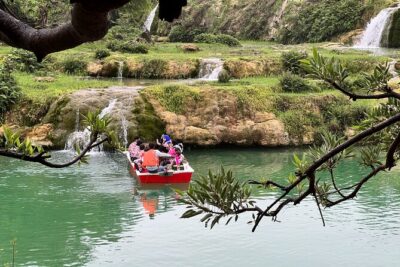
East Salalah Mountain Safari, Wadi Darbat, Beach, Camels, Dunes
Read our review →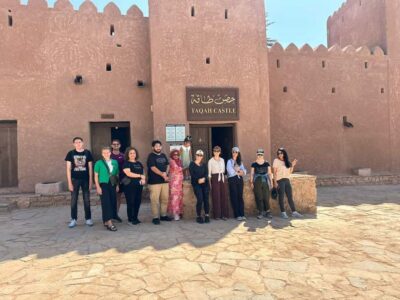
Wadi Darbat, Jabal Samhan, Baobab, Mirbat Sand Dune
Read our review →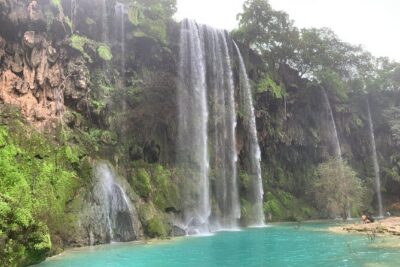
Sunset Desert Safari Salalah Tour in Rub Al Khali – Empty Quarter
Read our review →
Sunset Desert Safari – Rub Al Khali – Empty Quarter
Read our review →
West Salalah Tour – Caribbean of Orient – Fazayah Beach with City
Read our review →
West Salalah: Caribbean of the Orient Fazayah Beaches & City
Read our review →
Salalah City Tour: Discover the Best of Oman’s Coastal Gem
Read our review →Browse the lists this tour appears in